Article: Puppet Theater
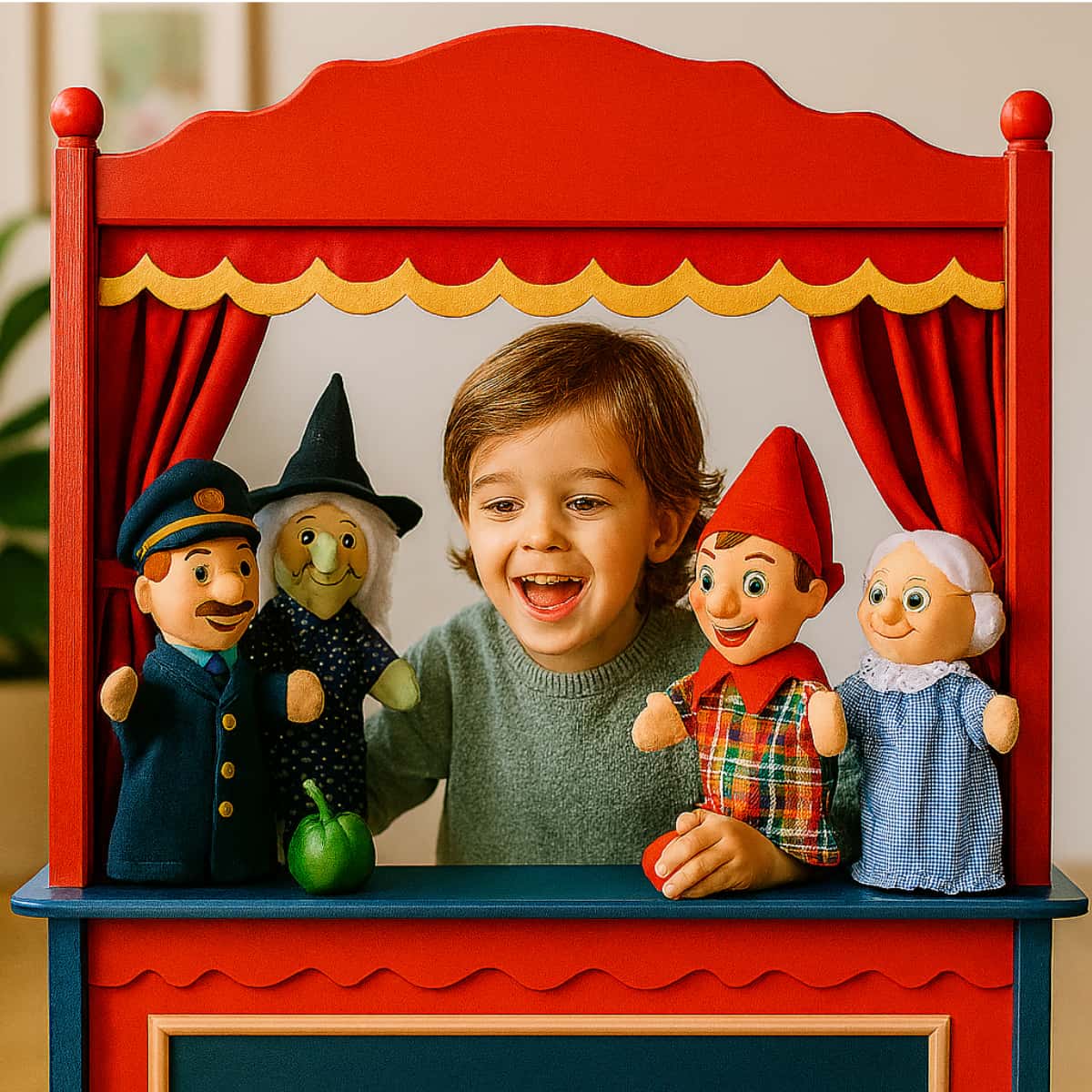
Puppet Theater
What Is a Puppet Theater?
A puppet theater is a classic form of imaginative play where children use hand puppets to perform short stories or scenes. One of the most iconic versions is the Kaspertheater, a traditional German puppet show featuring the cheerful and mischievous character Kasper, who often faces off against villains like the robber, crocodile, or wizard — always with humor and cleverness.
Puppet theater encourages language development, creativity, emotional expression, and social skills. Children invent their own stories, take on different roles, and learn to express feelings, solve conflicts, and entertain others. Whether watching or performing, puppet theater offers a playful stage for storytelling and learning.
Typical Elements of a Puppet Theater
-
Hand puppets: Kasper, princess, policeman, robber, crocodile, grandmother, and more
-
Theater stage: often made of wood or fabric, with curtains or a frame
-
Story themes: fairy tales, everyday situations, or original adventures
-
Audience interaction: children often speak directly to the audience (“Should Kasper do it?”)
Developmental Benefits
-
Boosts speech and vocabulary through storytelling
-
Strengthens confidence and social awareness
-
Supports emotional development through role play
-
Stimulates imagination and creative thinking
-
Teaches values and morals in a playful way
Materials and Variations
Puppet theaters come in many styles:
-
Soft hand puppets made of fabric or felt — safe and easy to handle
-
Wooden or fabric stages — freestanding or wall-mounted
-
Complete sets with multiple characters — ideal for siblings or group play
-
Portable versions — great for travel or small spaces
Recommended Age
Puppet theater is suitable for children aged 3 and up. Younger children enjoy watching performances, while older ones begin creating their own stories and characters. It’s a timeless gift for creative minds and a favorite in homes, preschools, and classrooms.