
Article: Understanding Role Play: Why Children Imitate Everyday Life
Understanding Role Play: Why Children Imitate Everyday Life
Introduction
Whether it’s a play kitchen, puppet theater, or toy shop, role play is one of the most meaningful and developmentally rich forms of play for children. This guide explores why kids love to imitate everyday scenarios, how it benefits their growth, and how parents can support this type of imaginative play.
1. What Is Role Play?
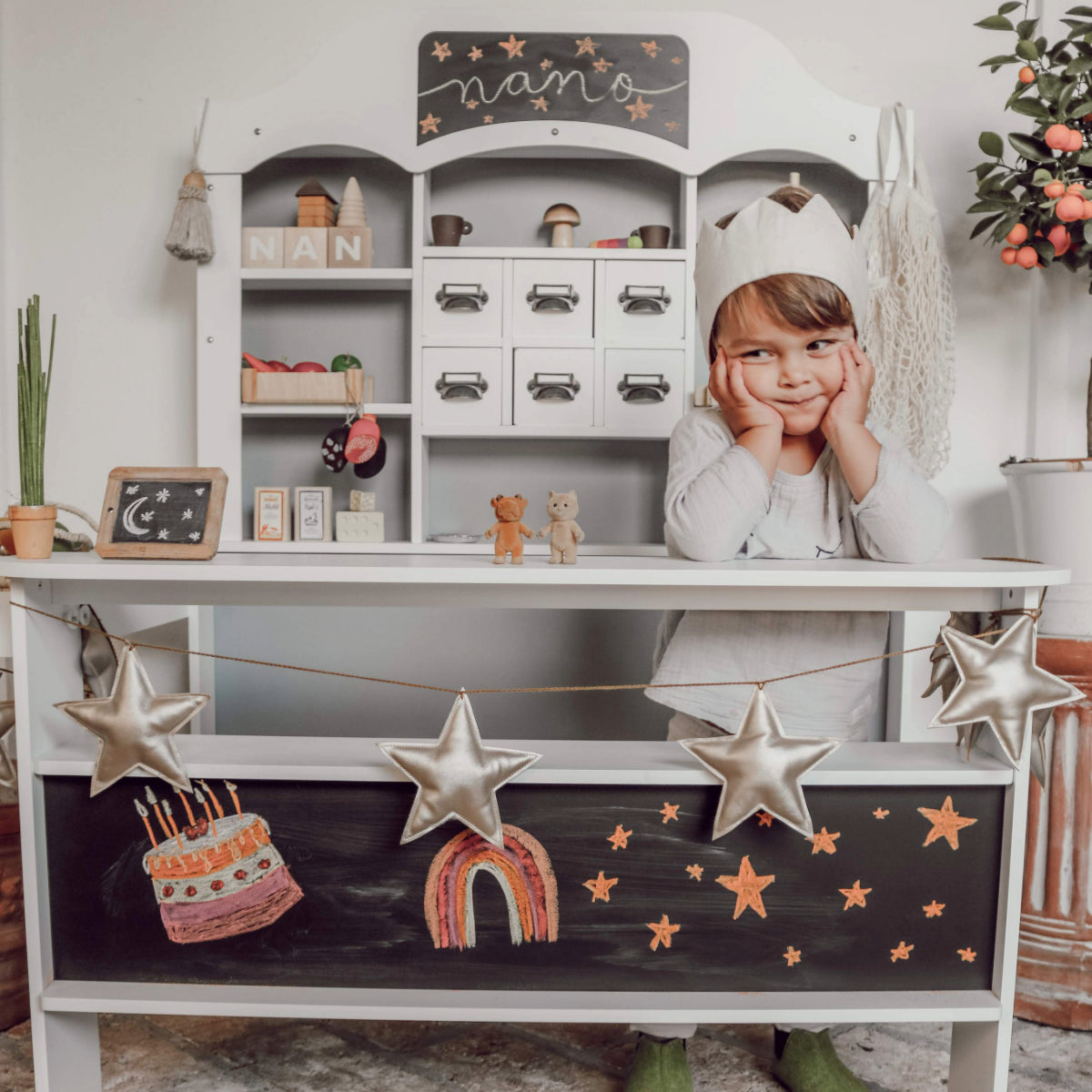
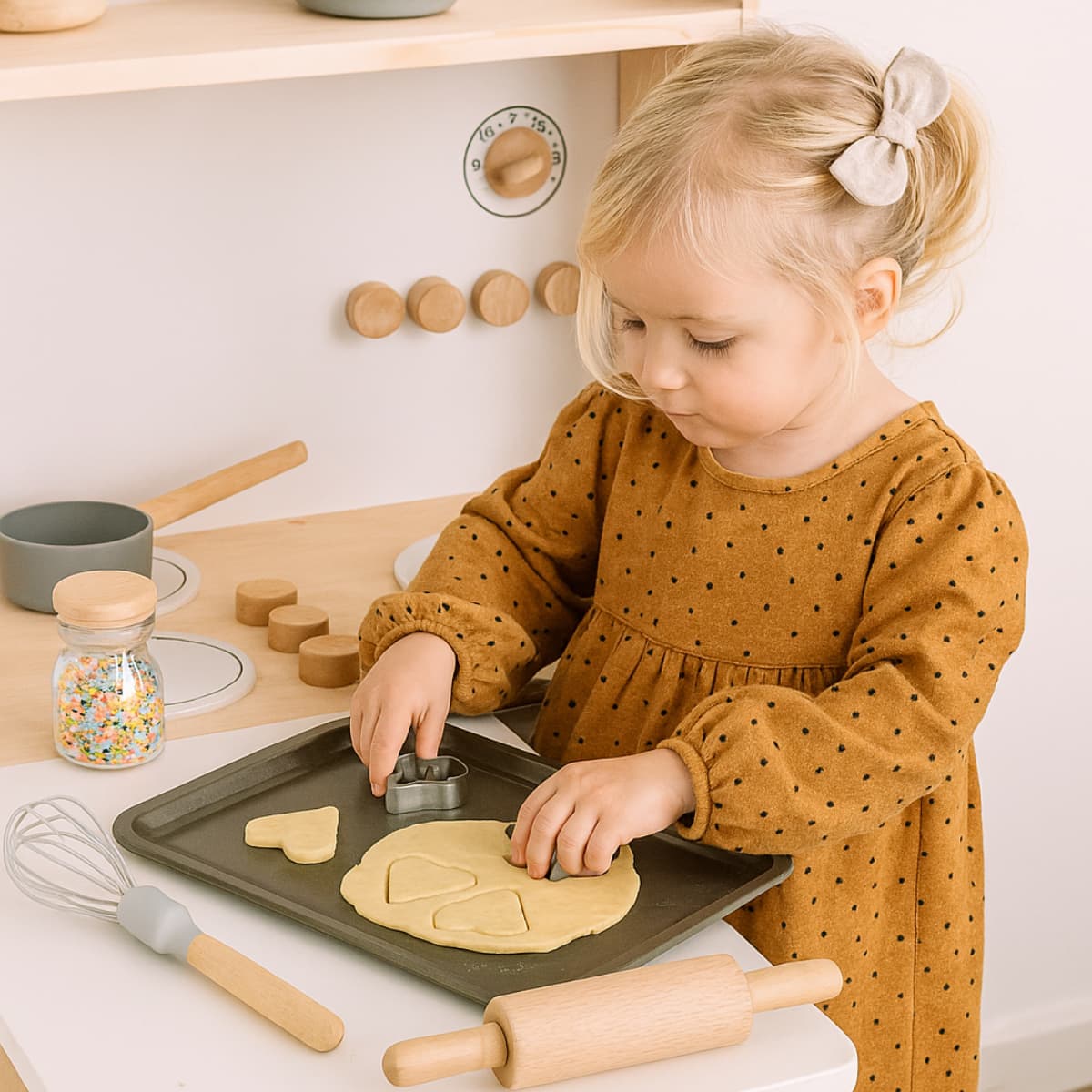
Role play occurs when children take on different characters and act out real-life situations. They “cook” in the play kitchen, “sell” items in the toy shop, or “perform” with hand puppets. Through this, they process experiences, observe adult behavior, and create their own imaginative worlds.
2. Why Is Role Play So Important?
Role play supports key areas of development:
-
Language skills: Children expand their vocabulary and practice dialogue
-
Social behavior: They learn empathy, cooperation, and perspective-taking
-
Cognitive growth: Role play strengthens memory, planning, and problem-solving
-
Emotional development: Kids explore feelings and build self-confidence
3. Play Kitchens, Toy Shops & Puppet Theaters in Action
These toys offer ideal foundations for role play:
-
Play kitchen: Encourages independence, everyday understanding, and fine motor skills
-
Toy shop: Supports math skills, communication, and social interaction
-
Puppet theater & hand puppets: Boost expression, storytelling, and listening skills
4. How Parents Can Support Role Play
-
Join in, don’t take over: Play alongside your child without directing the story
-
Provide open-ended materials: Accessories like wooden food, play money, or puppets expand possibilities
-
Create a dedicated play space: A defined area invites regular, focused play
-
Ask open questions: “What are you cooking today?” or “Who’s visiting your shop?” encourages storytelling
5. Integrating Role Play into Daily Life
Role play can easily be woven into everyday routines:
-
Let children help with real cooking and recreate it in their play kitchen
-
Prepare for shopping trips by playing “store” at home
-
Use hand puppets to tell bedtime stories or act out emotions
-
Create simple performances together with homemade props
Conclusion
Role play is far more than entertainment—it’s a gateway to learning, creativity, and emotional growth. With play kitchens, toy shops, and puppet theaters, children explore the world on their own terms. Parents who offer space, materials, and encouragement help their children thrive through imaginative play.

Leave a comment
This site is protected by hCaptcha and the hCaptcha Privacy Policy and Terms of Service apply.