
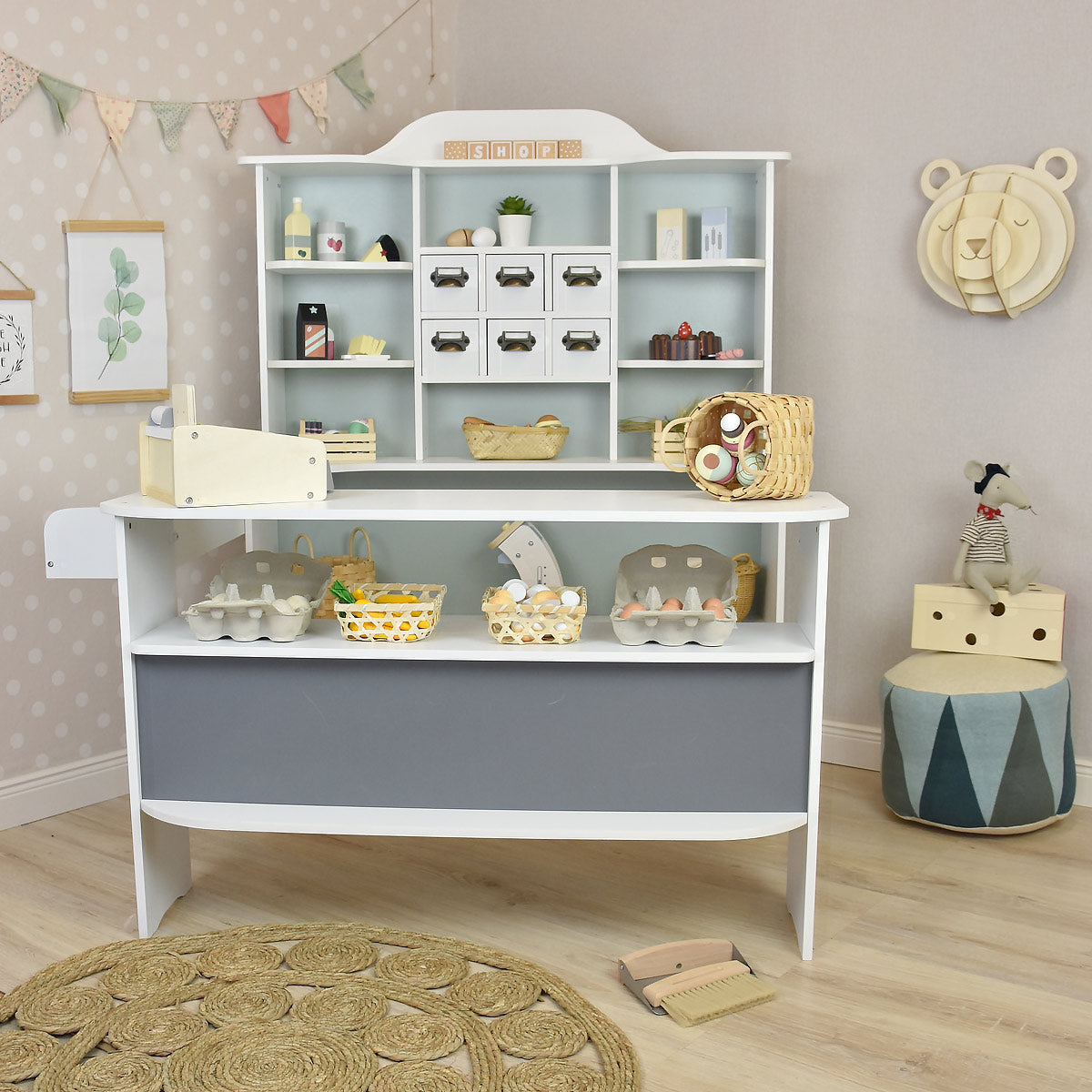
Grocery Store
What Is a Toy Grocery Store?
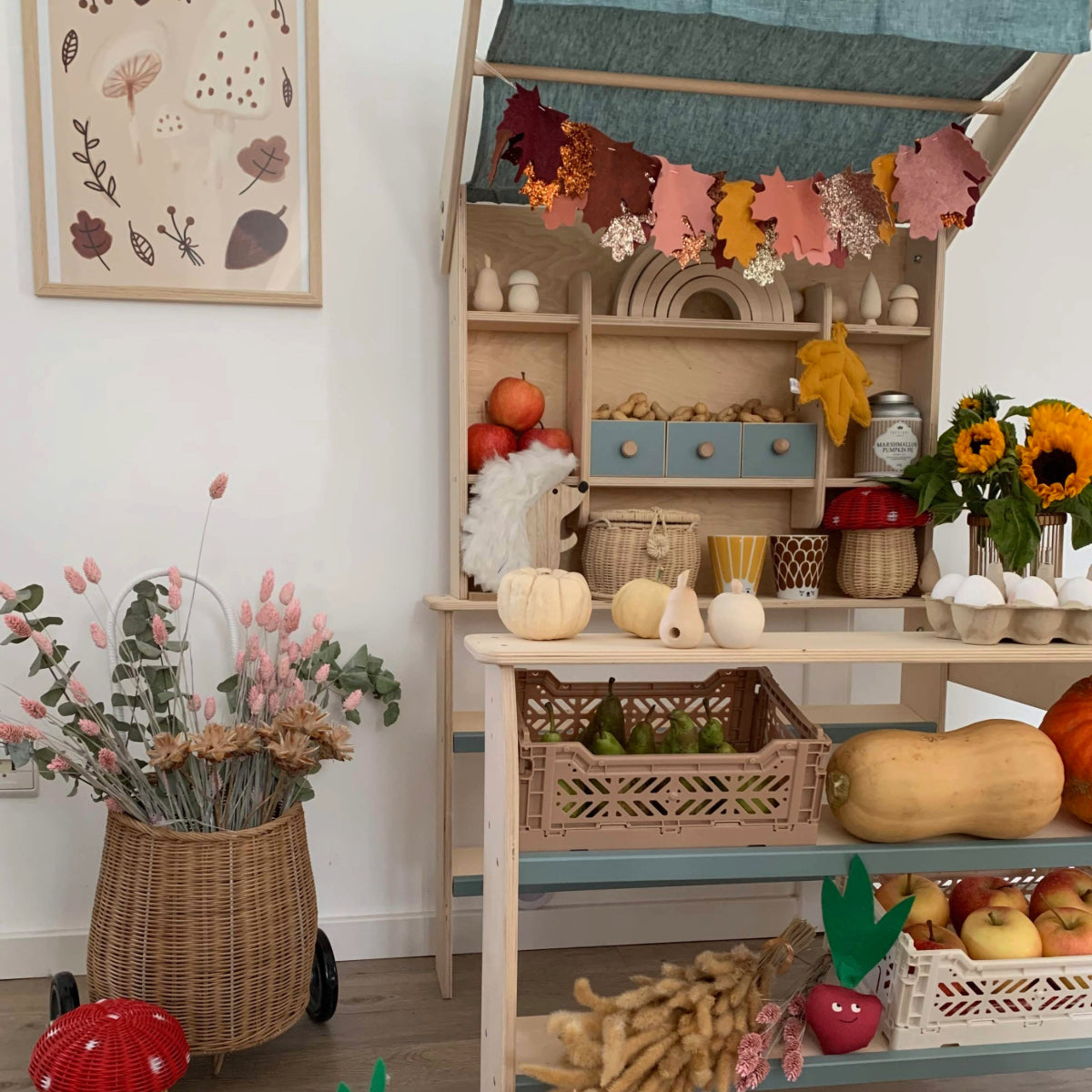
A toy grocery store is a classic pretend play setup that allows children to act out shopping and selling scenarios. It typically includes a small market stand or counter with shelves, a cash register, play money, and a variety of toy food items. Some sets also feature scales, shopping baskets, price tags, and packaging to enhance realism.
In this role play, children take on the roles of shopkeeper and customer, learning to communicate, count, sort, and negotiate. Toy grocery stores support language development, fine motor skills, early math concepts, and social interaction — all through imaginative play.
Common Features of a Toy Grocery Store
-
Counter and shelves: for displaying and “selling” products
-
Cash register and play money: for practicing payment and basic math
-
Scale, scanner, shopping basket: for realistic shopping experiences
-
Toy food: fruits, vegetables, baked goods, canned items
-
Price tags and packaging: for sorting, labeling, and creative play
Developmental Benefits
-
Encourages verbal expression and dialogue
-
Introduces basic math through counting and transactions
-
Strengthens fine motor skills through sorting and handling items
-
Teaches social rules like turn-taking, politeness, and role behavior
-
Sparks creativity and logical thinking
Materials and Variations
Toy grocery stores come in many styles:
-
Wooden: durable, eco-friendly, and visually appealing
-
Plastic: lightweight, colorful, often with sound or light effects
-
Compact models: ideal for small spaces or travel
-
Large market stands: with multiple stations for group play
Recommended Age
Toy grocery stores are best suited for children aged 3 and up, when they begin to engage in more complex role play. They make excellent gifts and are popular in homes, preschools, and daycare centers.


Leave a comment
This site is protected by hCaptcha and the hCaptcha Privacy Policy and Terms of Service apply.