

Buying a Play Kitchen – What Parents Should Really Consider
Introduction: Why a Play Kitchen Is More Than Just a Toy
Play kitchens are among the most popular role-play toys – and for good reason. They foster creativity, social skills, and motor development. But there’s a lot to consider when buying one: What’s the right material? What age is it suitable for? Which features are truly useful? And how much should you spend? This guide covers everything you need to know – including recommendations for high-quality models from Meppi.
1. What Age Is a Play Kitchen Suitable For?
Children typically start engaging in pretend play around 2 to 3 years old. A play kitchen is perfect for encouraging this development. Look for an age-appropriate height (about 50–60 cm) and safe construction. Younger children benefit from simpler models, while older kids enjoy more complex kitchens with accessories and add-ons.
2. What Material Is Best?
Wood is the top choice for durable, stable, and eco-friendly play kitchens. It’s visually appealing, robust, and free from harmful substances. Models like the Meppi “Copenhagen” or “Malmö” kitchens are made from high-quality plywood and feature charming details – ideal for parents who value design and sustainability.
3. What Features Should a Good Play Kitchen Have?
A well-equipped play kitchen should include:
-
Stovetops with turning knobs (clicking sounds are a bonus)
-
Sink with removable bowl
-
Oven or microwave
-
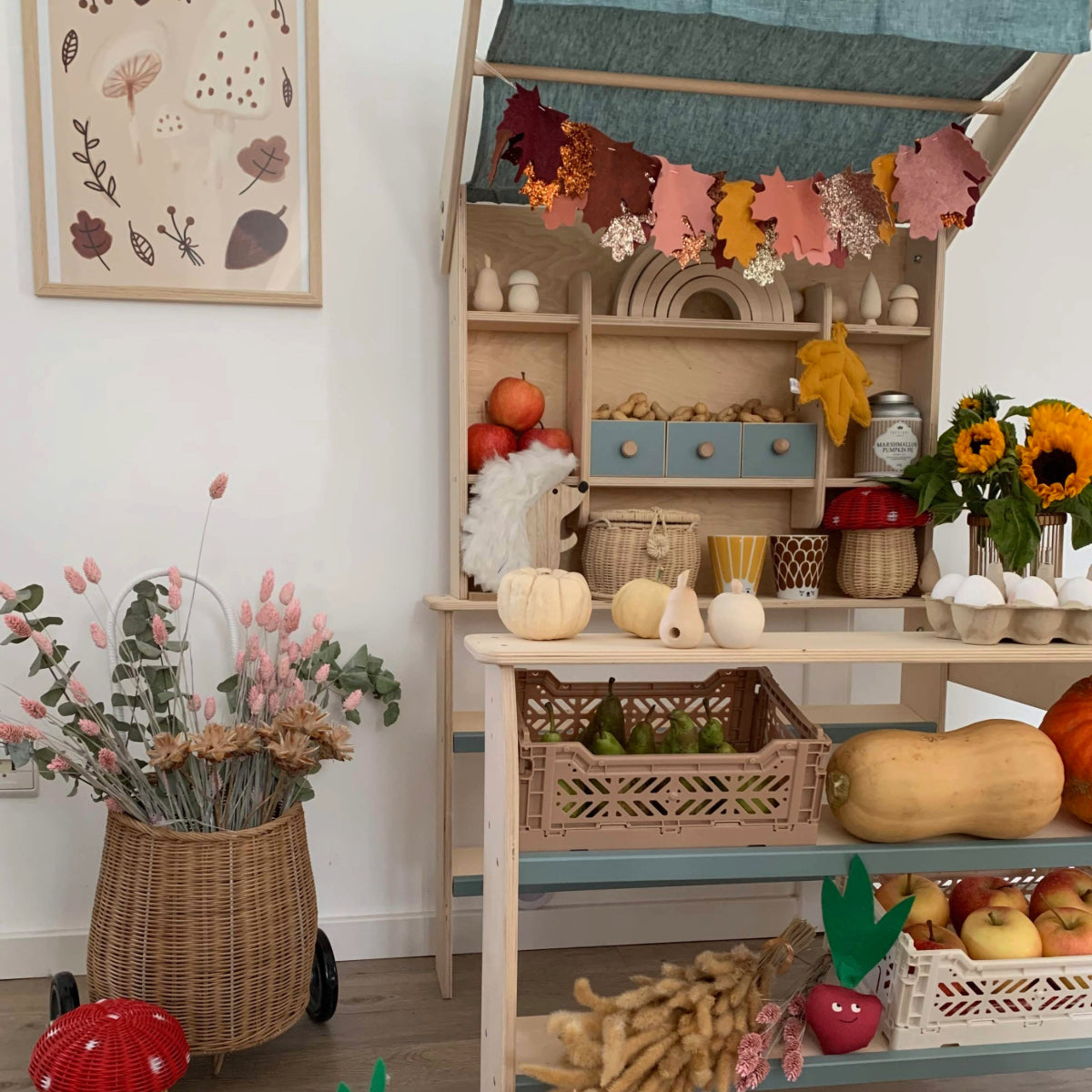
Storage: cabinets, shelves, hooks
-
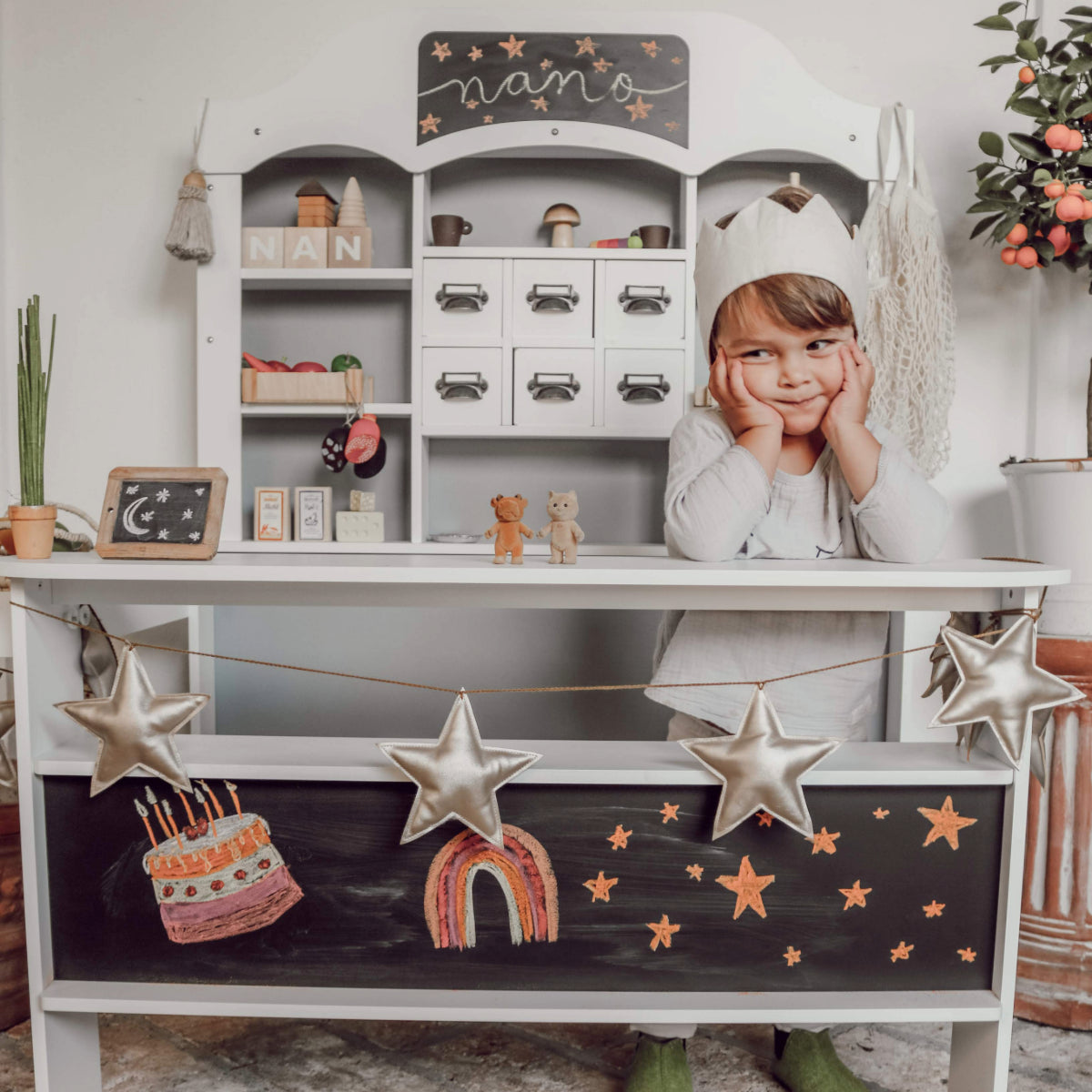
Chalkboard or writable surfaces
-
Accessories like pots, pans, and food items
The Meppi “Malmö” kitchen stands out with a large chalkboard, generous workspace, and clever storage – perfect for imaginative kids.
4. How Much Does a Good Play Kitchen Cost?
Prices range from around €60 to €200, depending on size, features, and brand. Budget models offer basic functions, while premium kitchens include more accessories and better craftsmanship. Meppi strikes a great balance between price and quality, offering thoughtful details and optional add-ons.
5. Where Should the Play Kitchen Be Placed?
The best spot is a safe, visible area in the child’s room or living room. Make sure there’s enough space for free movement. A small table and chairs nearby can turn the area into a full play restaurant. Compact models like the Meppi “Mini Kitchen” are great for smaller spaces.
6. How Many Children Can Play at Once?
Play kitchens are ideal for shared play – with siblings, friends, or stuffed animals. If multiple children are playing, ensure there’s enough workspace and storage. The Meppi “Copenhagen” kitchen, for example, offers a flexible layout and side extensions for more room.
7. Accessories & Add-Ons
The right accessories make pretend play more realistic and fun. Popular items include:
-
Pots & pans
-
Wooden food sets
-
Coffee machines or toasters
-
Fridges or washing machines
Meppi offers a wide range of matching accessories that keep the play experience fresh and engaging.
8. Sustainability & Safety
Look for certified materials (e.g., FSC wood), saliva-proof paints, and rounded edges. Meppi emphasizes sustainability and produces many models in Europe – ensuring short transport routes and high quality standards.
9. A Play Kitchen as a Gift Idea
Whether for a birthday, Christmas, or just because – a play kitchen is a gift that keeps on giving. Sets with accessories or seasonal editions are especially popular. The Meppi “Christmas Kitchen”, with its festive red design, is a holiday favorite.
10. Conclusion: Finding the Perfect Play Kitchen
A play kitchen is a valuable toy that supports children’s development for years. Choosing high-quality materials, age-appropriate features, and thoughtful design ensures long-lasting fun. With a Meppi play kitchen, you’re choosing quality, sustainability, and imaginative play.


Leave a comment
This site is protected by hCaptcha and the hCaptcha Privacy Policy and Terms of Service apply.