

Sandbox
What Is a Sandbox?
A sandbox is a classic outdoor play area filled with clean, fine sand where children can dig, build, and explore. Typically framed with wood, plastic, or other durable materials, sandboxes come in various shapes and sizes — from compact models for balconies to large communal sand pits in playgrounds.
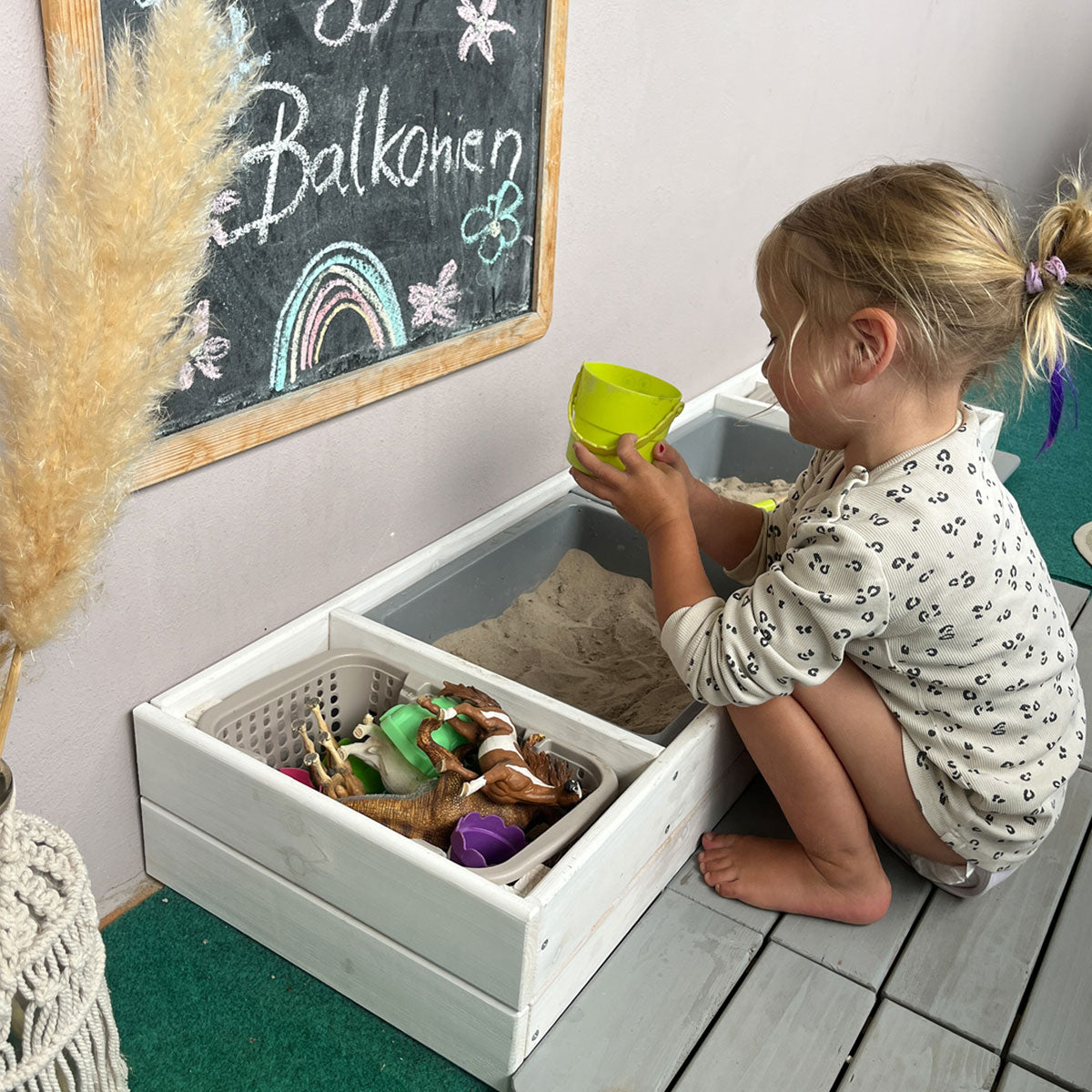
Playing in a sandbox encourages sensory exploration, fine motor skills, creativity, and social interaction. Whether building castles, baking sand cakes, or excavating with toy diggers, children engage in open-ended play that supports their physical and cognitive development.
Common Features of a Sandbox
-
Sturdy frame: made of wood, plastic, or fabric
-
Play sand: soft, washed, and safe for children
-
Cover or lid: protects the sand from weather and animals
-
Accessories: buckets, shovels, molds, rakes, toy vehicles
-
Optional sunshade or canopy: for UV protection and comfort
Developmental Benefits
-
Enhances fine motor skills through scooping, pouring, and shaping
-
Stimulates sensory awareness via texture and temperature
-
Encourages imaginative play and storytelling
-
Promotes cooperation and sharing in group settings
-
Introduces basic physics concepts like volume, weight, and cause-effect
Materials and Variations
| Type | Description |
|---|---|
| Wooden | Natural look, sturdy, blends into gardens |
| Plastic | Lightweight, colorful, easy to clean |
| Foldable fabric | Portable, ideal for travel or small spaces |
Some models include:
-
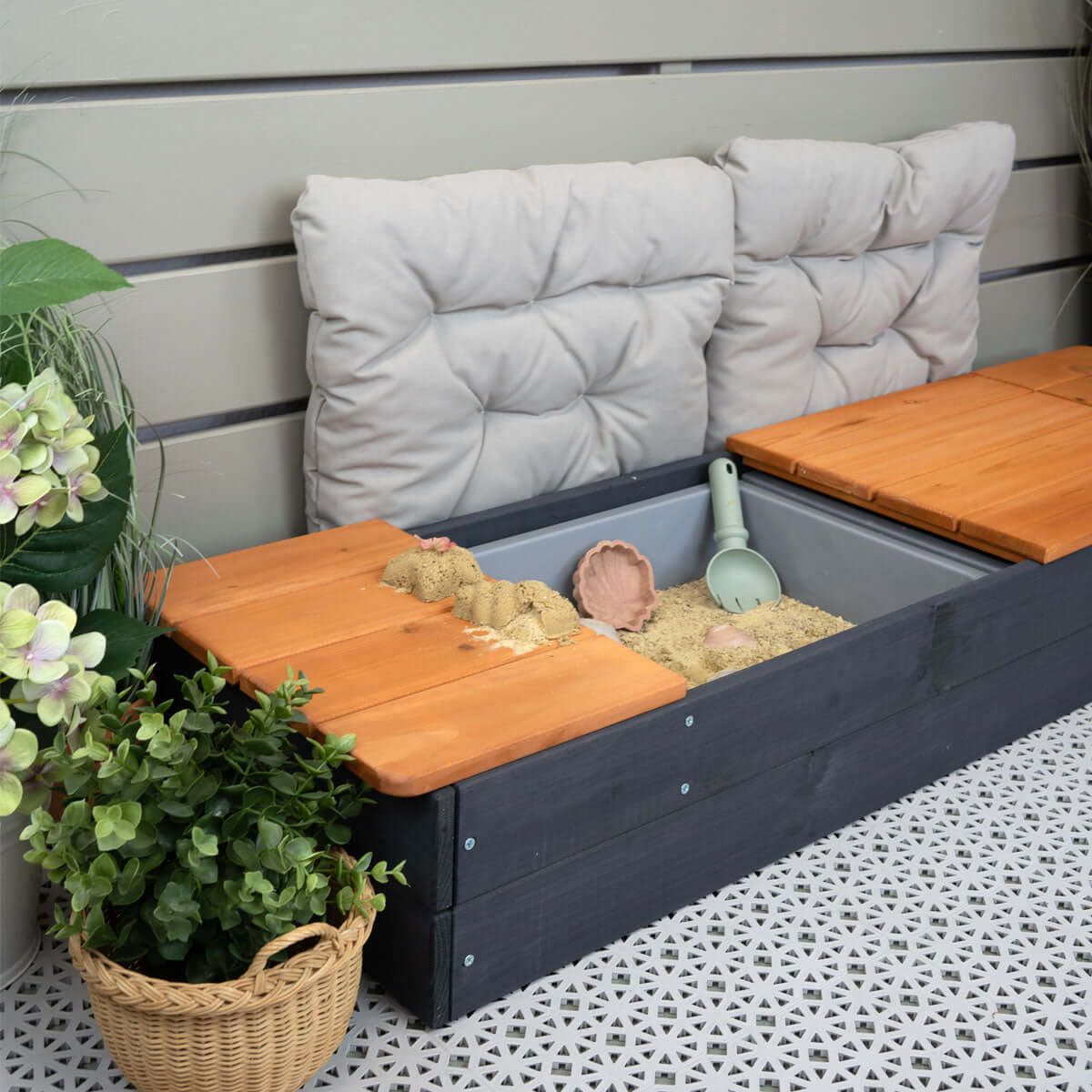
Built-in seating
-
Convertible lids that become play surfaces
-
Integrated water zones for wet sand play
Recommended Age
Sandboxes are suitable for children from around 12 months, once they can sit and grasp objects. They remain popular up to age 6 or older, as older kids enjoy more complex building and role play.


Leave a comment
This site is protected by hCaptcha and the hCaptcha Privacy Policy and Terms of Service apply.