
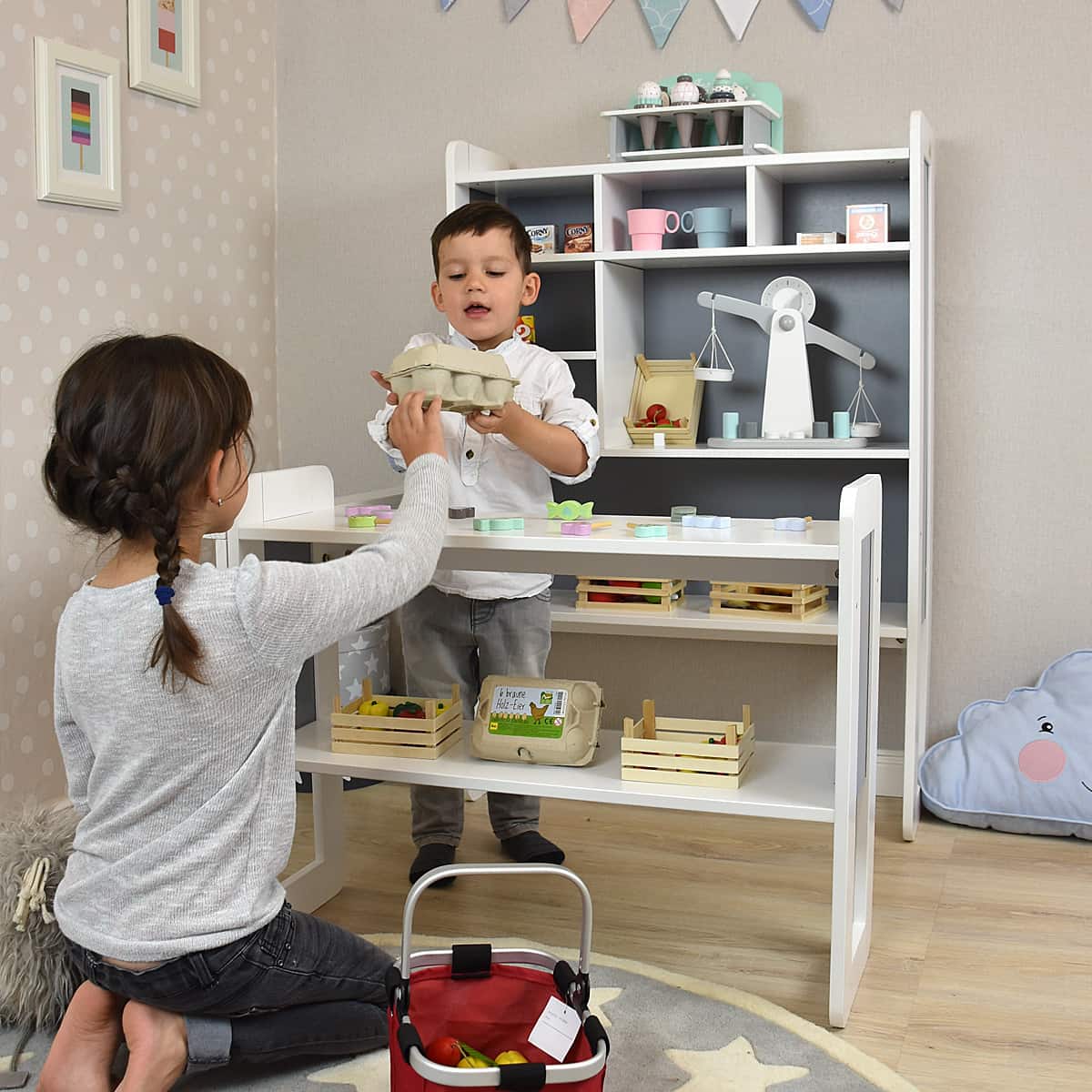
The Play Shop as a Stage – Little Theatre Between Fruit Crates and Cash Register
The play shop isn’t just a place for imaginative transactions—it’s a stage. Between toy fruit, mini cash registers, and wooden shelves, children create small theatre pieces that often reveal more than any conversation. It’s not just play—it’s performance, improvisation, and storytelling. The play shop becomes a setting for roles, emotions, and everyday drama.
Roleplay as a Window into Inner Worlds
Children use the play shop to reenact everyday situations and process their own experiences. The customer who complains, the cashier who stays polite, the special offer that excites everyone—these are scenes children observe and then creatively reinterpret. The shop becomes a stage where they express their view of the world.
Dialogues That Surprise and Delight
Listening to children play in the shop often feels like watching a live performance: “Today it only costs a smile,” “I don’t have money, but I have an apple,” or “You’re my favorite customer.” These spontaneous, heartfelt lines are full of humor and warmth. They show how children use language to build relationships and tell stories.
Switching Roles and Perspectives
Children constantly shift roles in the play shop: sometimes they’re the shopkeeper, sometimes the customer, sometimes just watching. This role-switching fosters empathy and perspective-taking. They learn what it’s like to help, to wait, to negotiate—and sometimes to say no. The game becomes a rehearsal for real-life social situations.
Improvisation Meets Structure
Though much of the play is spontaneous, children often develop routines: opening hours, regular customers, favorite products. This blend of free play and recurring patterns creates a sense of security and encourages self-organization. The play shop becomes a miniature theatre with its own rhythm and rules.
Conclusion: The Play Shop as a Stage for Life
Between fruit crates and the cash register, stories unfold that entertain, move, and teach. The play shop is far more than a toy—it’s a space where children shape their world, develop language, and express emotions. A small theatre with a daily premiere.

Leave a comment
This site is protected by hCaptcha and the hCaptcha Privacy Policy and Terms of Service apply.